
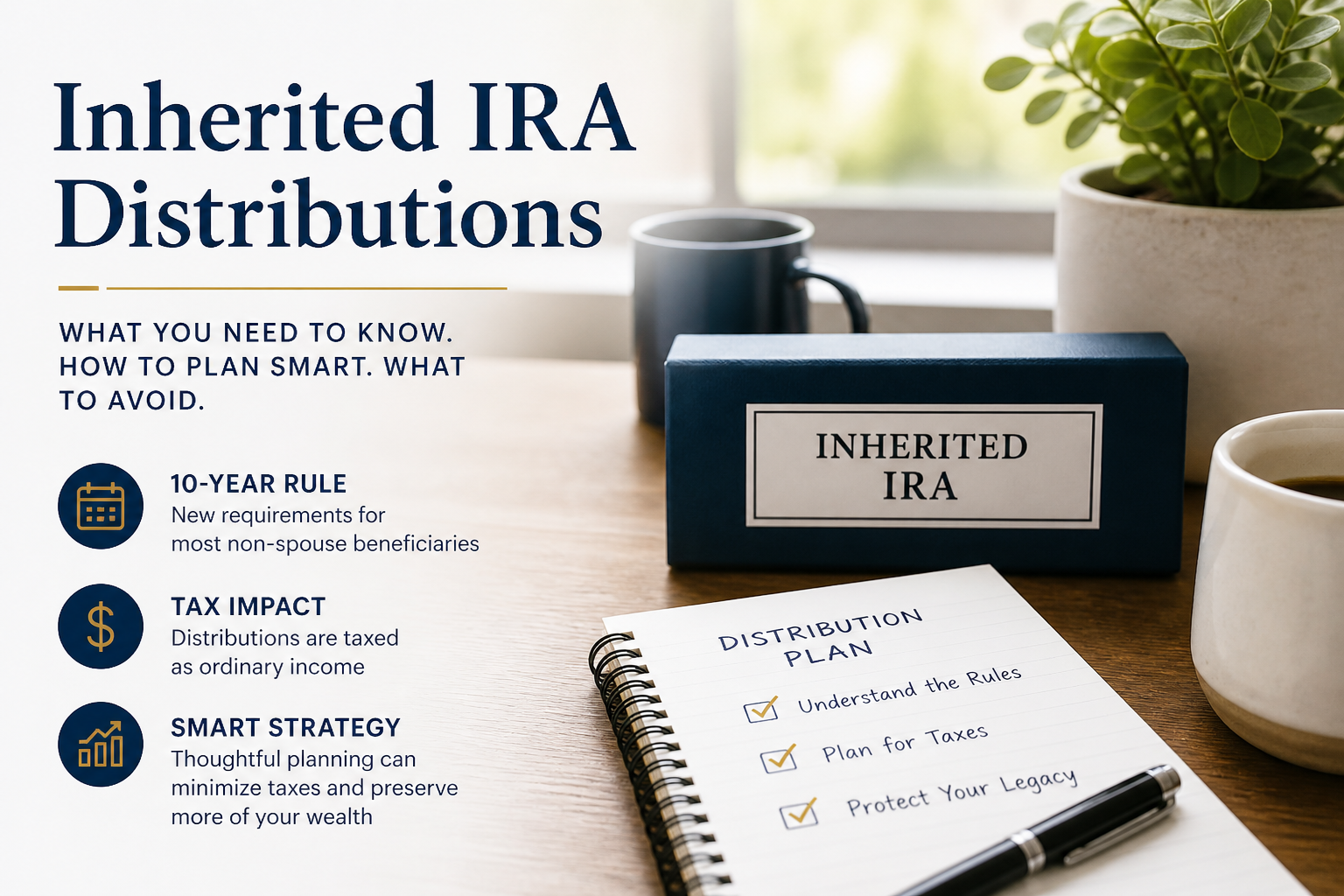
Inherited IRAs have changed significantly — and the rules today require more active planning than ever.
The 10-Year Rule
Most non-spouse beneficiaries must now withdraw the entire IRA within 10 years.
But there's an important distinction:
- If the original owner had already started RMDs → annual distributions are required during years 1–9
- If not → no annual requirement, but the account must still be emptied by year 10
Spouse vs. Non-Spouse Flexibility
Spouses have more options, including rolling the IRA into their own and delaying distributions.
Non-spouse beneficiaries generally must follow the 10-year rule with less flexibility.
The Tax Impact
Distributions from inherited traditional IRAs are taxed as ordinary income, which can:
- Push you into higher tax brackets
- Increase Medicare premiums
- Reduce tax efficiency if taken all at once
Smart Planning Matters
Even within these rules, strategy makes a difference:
- Spread distributions over time to manage tax brackets
- Align withdrawals with lower-income years
- Coordinate with your overall portfolio and tax plan
- For forward planning, consider Roth conversions to reduce the tax burden on heirs
Bottom Line
Inherited IRAs are no longer "set it and forget it."
A thoughtful distribution strategy can significantly improve after-tax outcomes — while poor timing can create unnecessary tax drag.